
So I know there’s a video of this one. It’s a silver HRV. I know I did some paint and a little demo on it, but the long and the short is. I overlooked a spot. It was a little low, and when I went to shoot it, you could see the deviation. In fact, I think you could see it in the video.
So what I did was I took red filler putty. I didn’t need much. Just a little bit. Otherwise I would use Bondo or icing. So I switched and just used just use a quick filler and it’s kind of hard to see because it’s covered where I primed it. And now I’m just I’m blocking the primer down with thousand grit. You can kind of see the deviation is gone. So we’ll see how it looks when I shoot it.
So just to show you what’s going on. It’s been primed and wet sanded, and it’s ready for paint. I got a heat lamp warming the panel up because it is cold outside and we don’t want any kind of fish eye or curing issues. We don’t want our paint to run.
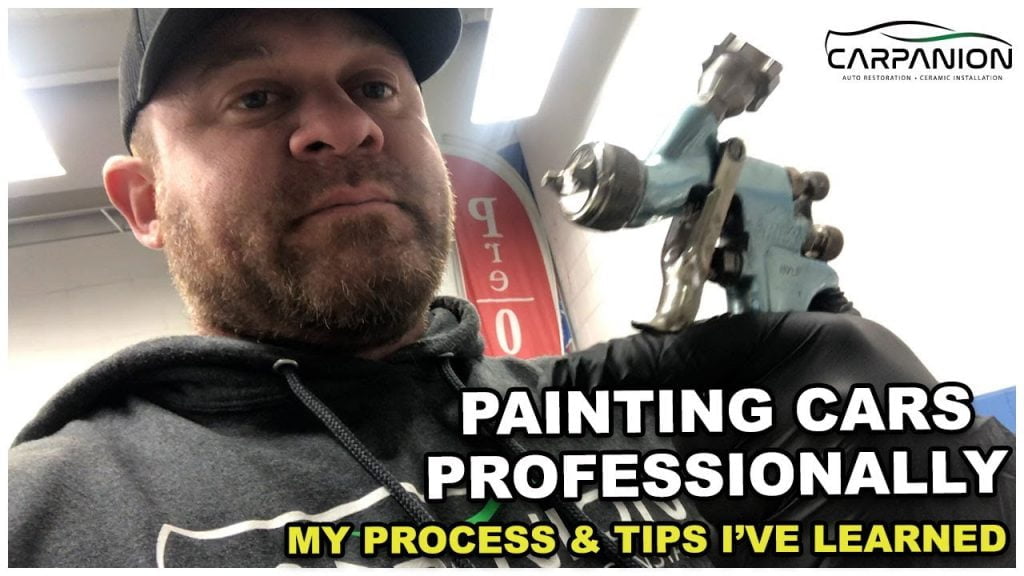
So the other thing I wanted to show you guys, this made a huge difference in my paint game I used to shoot out of this standard DeVilbiss pneumatic, used to use air. I switched to this system here, the Graco, and hands down I get a better product. My clear coat goes down closer to glass than it ever did with anything pneumatic before. Big difference. So if you’re painting and you do this for a living, it’s worth the investment. Be at one for I think about a $1,000 used maybe a little less, maybe a little more if you get a bigger volume one. But it definitely it was a game changer.
What I just did was I laid down a thick, wet coat to cover any primer that I have and also get the primary color down on the bumper. My next step is to let this cure a little bit, let some of the solvents escape, and then put down a dry coat so that when we go to clear it all the metallics are laying down the same way.
If you’re gonna do a spot in, you have to dry spread. In order to get the Metallics to line up right. But it’s basically so you cannot see where the new paint is and the old paint begins. Just another thing that I need to address with everybody so there’s no confusion. A lot of times you guys will see me shooting out of this gun right here, and I’ll be shooting out of this. It’s a hard bladder. Well, it’s not. The paint doesn’t actually go in here. This is just the housing.
The bladder that actually goes in there is a three ounce bladder so we’re compliant.
So what I did in the second part here was I turned the air up on my gun. I pulled it way back because I don’t want the paint getting wet. All I want to do is just make sure that everything that goes down is dry. I want everything dry so it matches all the old paint ways laying down. Because if I were to wet this section up it’s fresh and then clear coat over it, you would see exactly what was wet, what was new and what was old. So the point in dry spraying is to blend everything together.
What I just did was shot my first coat of clear. I go a little heavy. Most people like to do a tack coat before they actually get into it. I can be somewhat impatient. And I like shaving times any chance I can without sacrificing the finish, so I’ll usually shoot a heavy base coat in my clear. For my first coat, I’ll go a little heavy, and then what I do is I’ll slow it down as I put the top coats on.
The other thing you want to be careful of is making sure that you are able to blend your wet and dry line before it tacks up. If you’re using fast hardener or even kicker and if you’re not on top of it fast enough, your blend line won’t be able to be… you won’t be able to melt it properly. You’ll have to go back and wet sand and buff it all out. So check it out now I’m just gonna blend it. This stuff works great. You can use reducer but as far as convenience goes this is the real deal.
The point of this is to melt the edges where the new clear coat ends and the old clear coat begins. You’ll have a dry spray line so this will melt that into the old clear giving you one solid slick finish.